

For decades, choosing an office was largely a practical decision. Businesses looked at square footage, lease terms, parking availability and proximity to clients. An office was viewed as a fixed address where employees arrived, completed their tasks and left at the end of the day.
That definition has changed. Today, businesses are not simply looking for office space. They are looking for an environment that supports their teams, reflects their culture, strengthens their brand and makes everyday work easier. The workplace is no longer only a place to sit and work. It has become an experience that can influence productivity, employee satisfaction, collaboration, client confidence and business growth.
The modern workplace is built around choice because every team works differently. Some employees need quiet spaces to focus. Others need energetic zones for brainstorming. Leaders need private rooms for important discussions. Clients expect professional meeting spaces. Growing teams need flexibility to expand without the pressure of setting up a completely new office. This is why the shift from office space to workplace experience matters more than ever.
From Fixed Desks to Flexible Workdays
The traditional office model was simple. Employees arrived, sat at assigned desks and worked through the day within the same four walls. While this structure worked for many years, it does not always support the varied nature of modern work. A single workday can include focused individual tasks, virtual meetings, client presentations, team catch-ups, creative discussions and quick conversations over coffee. Each of these moments requires a different type of environment.
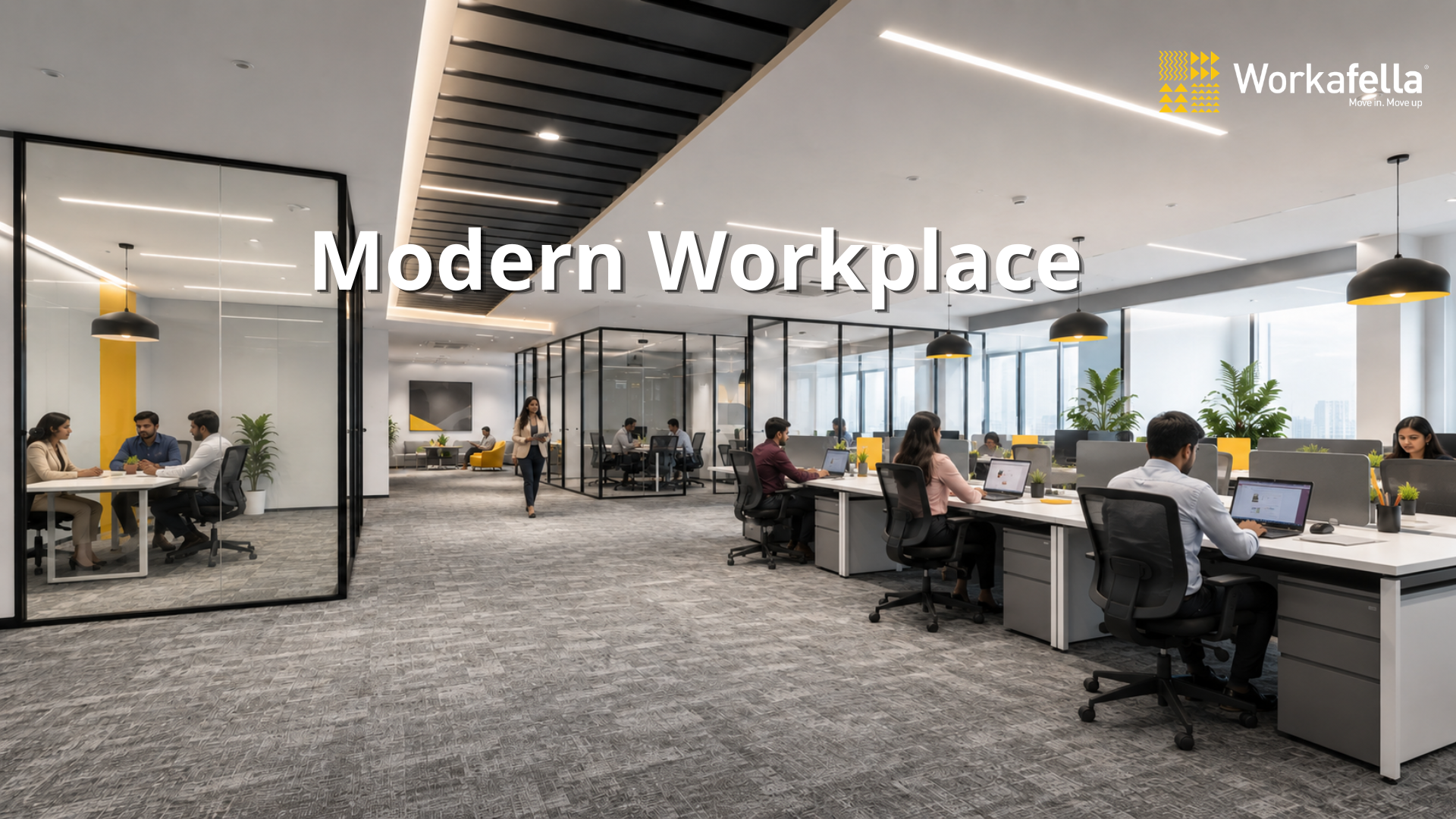
A well-planned workplace gives people the freedom to choose the setting that supports their work best. Private cabins and quiet zones can help with concentration and confidential conversations. Collaborative spaces can encourage teams to exchange ideas. Meeting rooms can provide a polished setting for client interactions. Pantries and breakout areas can offer employees a chance to pause, connect and recharge. The purpose is not simply to create a visually attractive office. The purpose is to create a space that works better for the people using it.
Choice Creates Better Productivity
Productivity is often mistaken for working longer hours or completing more tasks in less time. However, real productivity comes from having the right environment to do meaningful work. An employee trying to complete a detailed report may not perform well in a noisy, high-traffic area. A marketing team working on campaign ideas may not benefit from sitting silently at separate desks. A founder preparing for a client presentation may need a professional setting that creates confidence and focus. When people can choose where and how they work, they are more likely to feel engaged, comfortable and effective. This does not mean creating an office with unnecessary complexity. It means designing the workplace with purpose. Reliable internet, comfortable seating, accessible meeting rooms, clean amenities, helpful support teams and well-managed common areas may appear like small details. But together, they shape how employees experience their workday. The best workplaces reduce everyday friction. They help people spend less time solving operational issues and more time focusing on the work that matters.
The Office Has Become a Culture Tool
Work culture is no longer built only through company policies, annual celebrations or team outings. It is shaped by everyday interactions. The way people greet each other in the morning, collaborate during meetings, take breaks, celebrate achievements and welcome new employees all contribute to workplace culture. The office environment plays a major role in making these moments possible. A warm reception area can make visitors and employees feel welcome. A thoughtfully planned pantry can become a space for informal conversations. Comfortable breakout spaces can encourage teams to connect beyond formal meetings. Meeting rooms can support clearer discussions and faster decision-making. In this sense, a workplace is not just where a business operates. It is where the company’s personality becomes visible. For growing businesses, this becomes even more important. As teams expand, maintaining a connected culture can become difficult. A workplace that supports communication, collaboration and shared moments can help employees feel part of something bigger than their individual responsibilities.
Flexibility Is Now a Business Advantage
Business requirements can change quickly. A startup may hire ten people within a few months. A company may open a new branch in another city. An enterprise team may need a project office for a specific department. A business may want to explore a new market before committing to a long-term location. Traditional office leases are often not designed for this level of change. They can involve large upfront investments, long lock-in periods, fit-out expenses, maintenance responsibilities and operational challenges. Businesses then spend valuable time managing facilities instead of focusing on customers, people and growth.
Flexible and managed workspace models are changing that experience. They allow businesses to move into ready-to-use environments with essential infrastructure, professional support and workplace amenities already in place. This gives leaders more control over their growth decisions. Instead of committing to a large office based on future projections, businesses can choose a workspace that fits their current needs and scale when the time is right. The real advantage is agility. Companies can adapt, grow and operate professionally without unnecessary pressure.
Experience Matters to Employees and Clients
The workplace experience influences more than internal operations. It also shapes how clients, business partners and potential employees view a company. For clients, a professional office can build trust even before the meeting begins. A well-maintained reception area, comfortable meeting room, organised visitor experience and credible business address all create a strong impression. For employees, the workplace sends a message about how much the company values their time, comfort and wellbeing. A cluttered, uncomfortable or poorly managed office can affect morale. On the other hand, a bright, organised and people-focused environment can make employees feel more motivated to contribute. Talent today is not only evaluating job roles and salary packages. Professionals are also considering commute convenience, workplace quality, team culture, amenities and flexibility. The office has become part of the employee value proposition. Companies that invest in a better workplace experience are often better positioned to attract and retain capable talent.
The Future Is Not One-Size-Fits-All
There is no single perfect workplace model for every business. A technology company, consulting firm, creative agency and sales-driven organization may all need different types of work environments. Even within the same company, different departments may work best in different settings. That is why choice is at the centre of the modern workplace. The future belongs to offices that can support focused work, collaboration, client meetings, employee wellbeing and business expansion within one seamless environment. It belongs to workspaces that understand people do not just need a desk. They need an ecosystem that helps them perform, connect and grow.
Why Workafella Fits the Modern Workplace
Workafella is built for businesses that want more from their office than just desks and square footage. With premium managed workspaces, private offices, dedicated desks, custom-built offices, meeting rooms and collaborative areas, Workafella gives teams the freedom to choose how they work best. From high-speed internet and professional front-desk support to thoughtfully designed lounges, pantries and meeting spaces, every detail is created to make the workday smoother. The focus is not only on providing a place to work, but on creating an environment where teams can focus, collaborate, meet clients and build stronger workplace culture. Whether a business is a growing startup, an established enterprise or a team expanding into a new city, Workafella offers the flexibility to move in quickly, work confidently and scale without operational stress. With premium locations, fully managed infrastructure and people-first workplace experiences, Workafella helps businesses stay agile while maintaining a professional presence. Workafella is not simply an office space. It is a complete workplace experience designed for productivity, collaboration, employee comfort and business growth.